Virtue Creative Systems · In development
Virtue Console
A mixer for REAPER with calibrated metering on every track, and a channel strip that stays out of the way until you switch it on.
Opening it inserts nothing into your project and changes nothing you did not ask it to change. That is a design rule, not a default.
Not released. No price yet. macOS, inside REAPER.
The rule everything else is built around
Opening Console inserts nothing.
Placement happens when you open it
Never on project load. Opening an old session to find something new in the chain is the thing this rule exists to prevent.
Removing it is an instruction
Take the probe off a track and it is not put back. Putting one back by hand overrides the opt-out. Your decision holds in both directions.
The channel strip is off by default
It is opt-in, per track. Nothing is processed because you opened a mixer. If you never switch it on, it never runs — and it costs you nothing.
What is built today
A mixer, with the readings on it.
Everything on this list works now. Anything not on it is not built, and is not described anywhere on this page as though it were.
A meter bridge across the top
Every track's meter in one row, scrolling in lockstep with the channels beneath it, so the bridge and the strip never disagree about which track you are looking at.
Analog meters, six scales
VU, PPM, K-12, K-14, K-20 and LUFS. Three sizes, one needle or two. A meter skin per track, with a global default, so the drum bus can read K-14 while the master reads loudness.
Key detection, ranked and honest
The three most likely keys for each track, in order, each with a confidence figure attached. A guess that tells you how much of a guess it is.
An FX list you can throw things at
Empty drop slots, drag to reorder, and drag-and-drop straight from Virtue FX Manager or from the Finder. A plugin dragged onto a channel lands on that channel.
Sends, routing and phase in the strip
The sends list, the routing row, phase, FX chain bypass and monitor cycling, all on the channel rather than three dialogs away.
Built to be rearranged
Reorder channels by dragging the scribble strip. Extra rows appear when the window is tall enough to hold them. Mouse wheel on a fader or a pan, double-click to reset, and REAPER's own transport shortcuts keep working while the window has focus.
The processing
Switch the strip on and it is ours, all the way down.
Filters, dynamics and a four-band equaliser on the channel. Summing, tape and a channel voice across the desk. A stereo stage at the end. None of it runs until you ask a track for it, and all of it is built to a standard that is worth paying for — which is the argument below, with the measurements attached.
Every nonlinear stage is oversampled
A summing encode, a tape, a valve — anything nonlinear makes harmonics, and the harmonics above half the sample rate do not vanish. They fold back down and land on frequencies with no musical relationship to what you played. Harmonic distortion sounds like weight, because it lands on notes related to the note. Folded distortion sounds like grit, and it moves the wrong way: play a rising line and those products descend. That is most of why digital saturation sounds small next to the hardware it is copying.
So we measured it. A 6.5 kHz tone through a hard nonlinearity, summing the energy in every FFT bin that is not a harmonic of the input — everything produced that has no relationship to what went in.
Reproducible, from the test suite, not from a listening session. Oversampling reduces this — it does not abolish it, and anyone who tells you otherwise has not measured it.
2x and 4x, and 1x is still there
1x is the original behaviour, it is a sound, and someone will want it. It is not the default.
The latency is declared
Exactly half the filter length, reported to the host, so your channels stay lined up. We tell you the number rather than pretending there isn't one.
Linear phase, stated stopband
A polyphase halfband filter, whose coefficients are derived at start-up rather than copied from a table — so the stopband is a number we can quote.
The stereo stage leaves your low end alone
Below about 150 Hz the ear places a sound by level and timing, not by the channel-to-channel relationship a widener manipulates — and a room's low end is ruled by its modes, not by where the sound is. So widening the bass buys no image at all, and it costs you the weight of the mono sum. It is the most common single reason a mix that sounds enormous on headphones falls apart on a club system, a phone, or a record.
So the stage splits the signal, widens only what is above the crossover, and returns the low band untouched. The crossover is fixed and has no control, deliberately: you cannot hear a crossover, only what it protects, so a knob here would be one nobody could set by ear. It is a gentle one-pole, chosen so the two bands sum back to the input when the widener is doing nothing at all.
It stays cheap in the quiet parts
Every filter on the desk decays toward zero when the music stops, and lands in the denormal numbers below the float format's normal range — where some processors run one to two orders of magnitude slower. The symptom is a plugin that is cheap while playing and expensive in the gaps, which is exactly the wrong way round: the gaps are where forty channels of reverb tail have nothing to hide behind. It never shows up on a CPU meter, because you read that while something is playing. One register write per block fixes it, and the host's own setting is put back on the way out.
Planned · none of this is built yet
Nine desks, and none of them exist.
The channel strip is one sound today. The plan is that it becomes nine, each with the look and the behaviour of a different kind of desk, chosen per track and still off until you ask for it. This is the drawing board, not a feature list — the artwork exists, the voices do not, and nothing here can be selected in the product.
Each one is described by how it should sound.
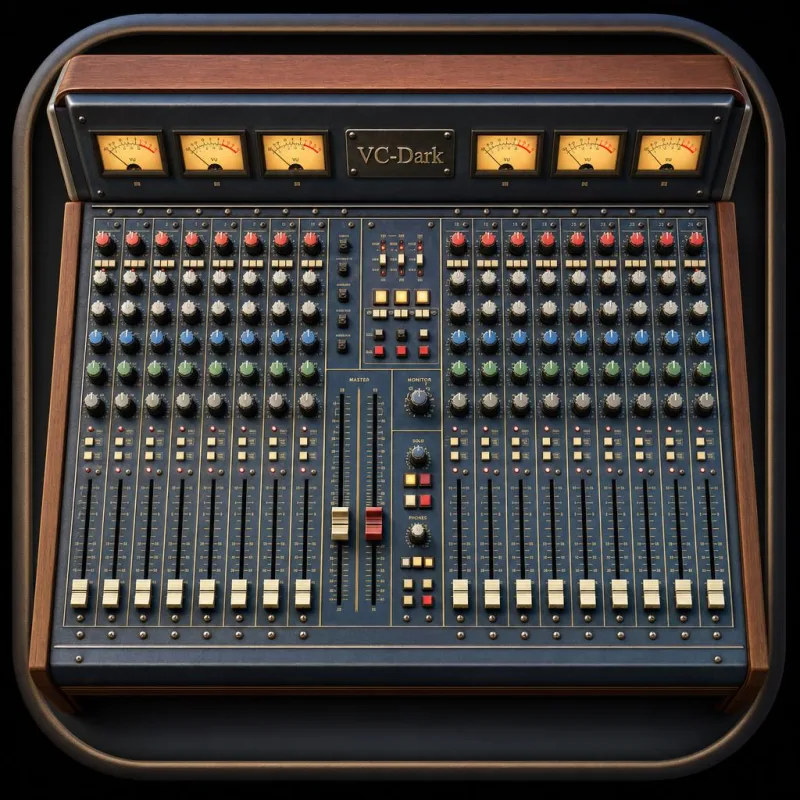
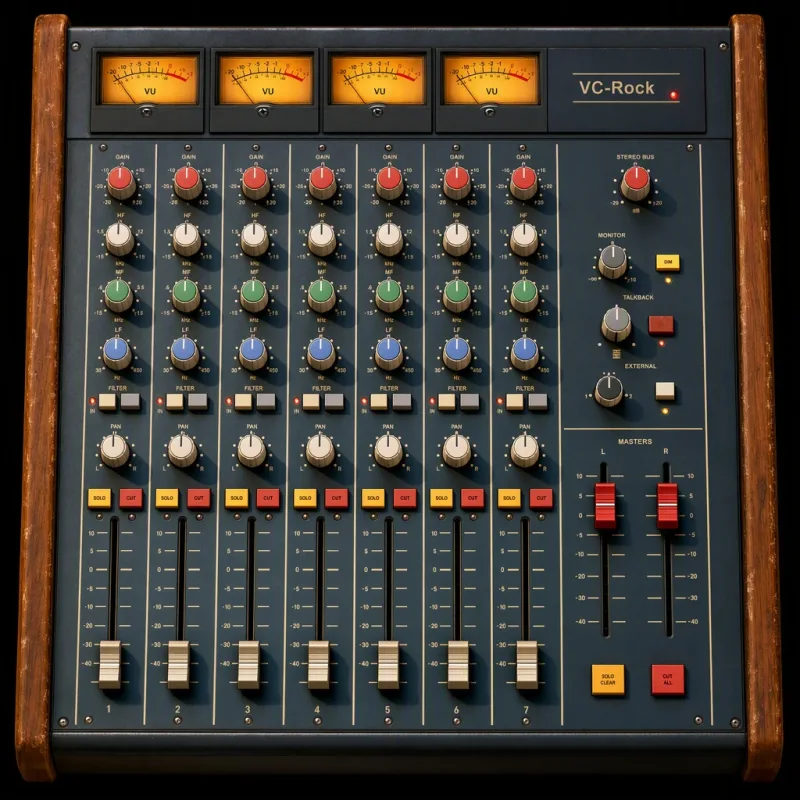
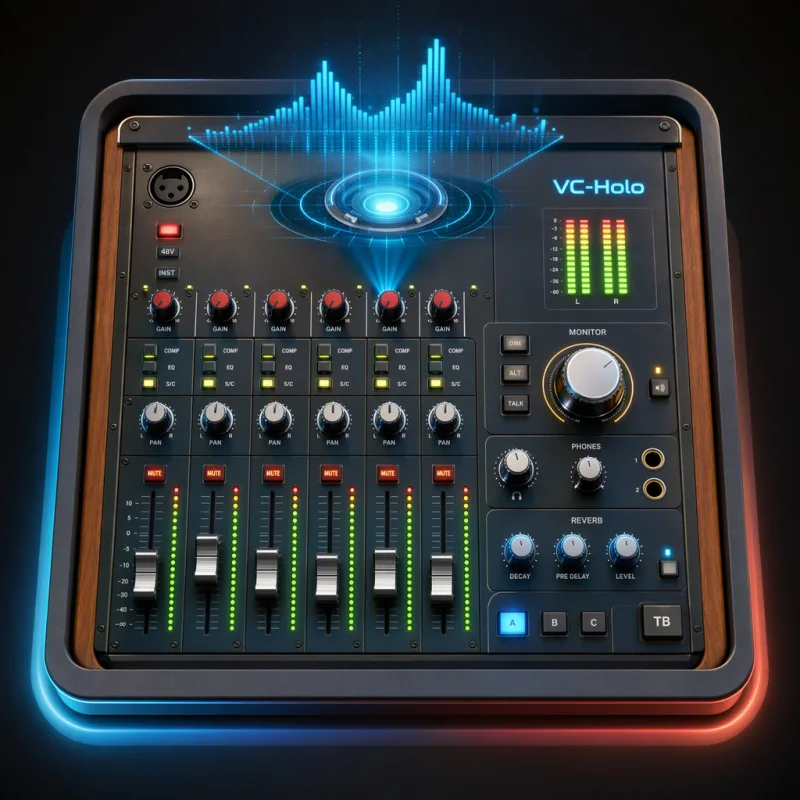
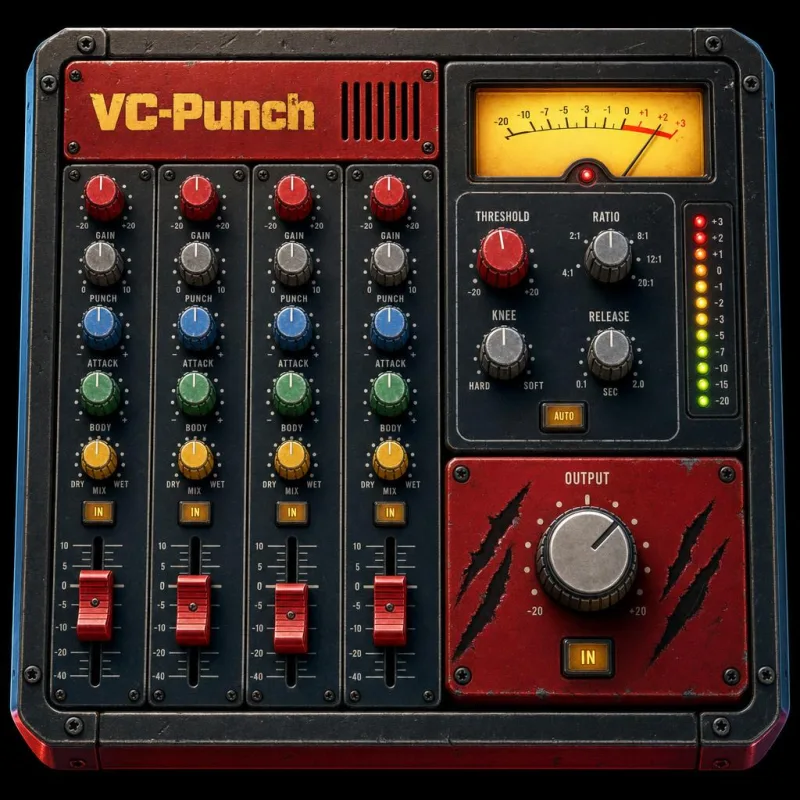
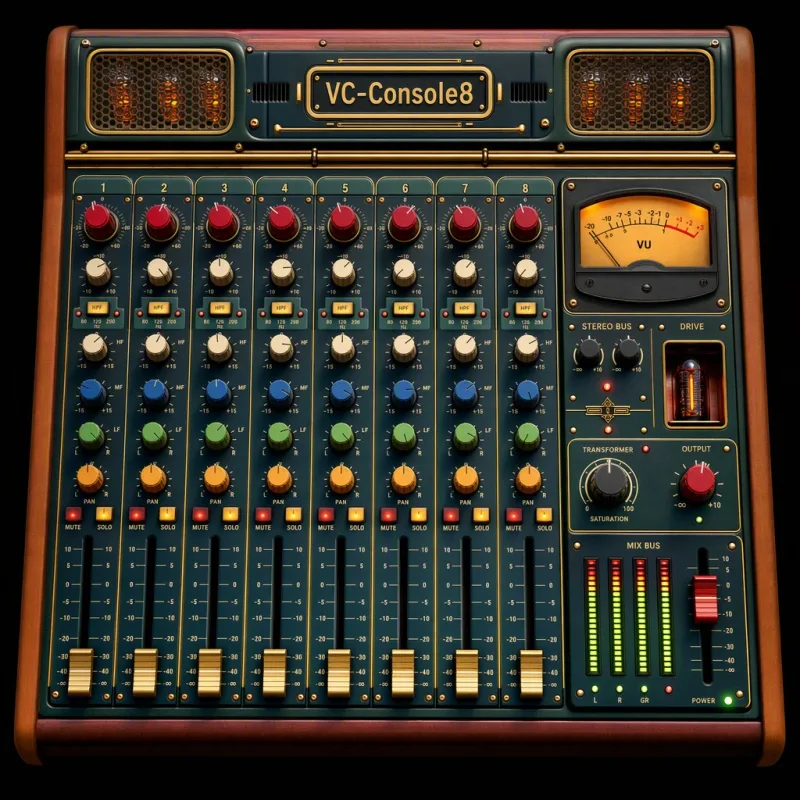
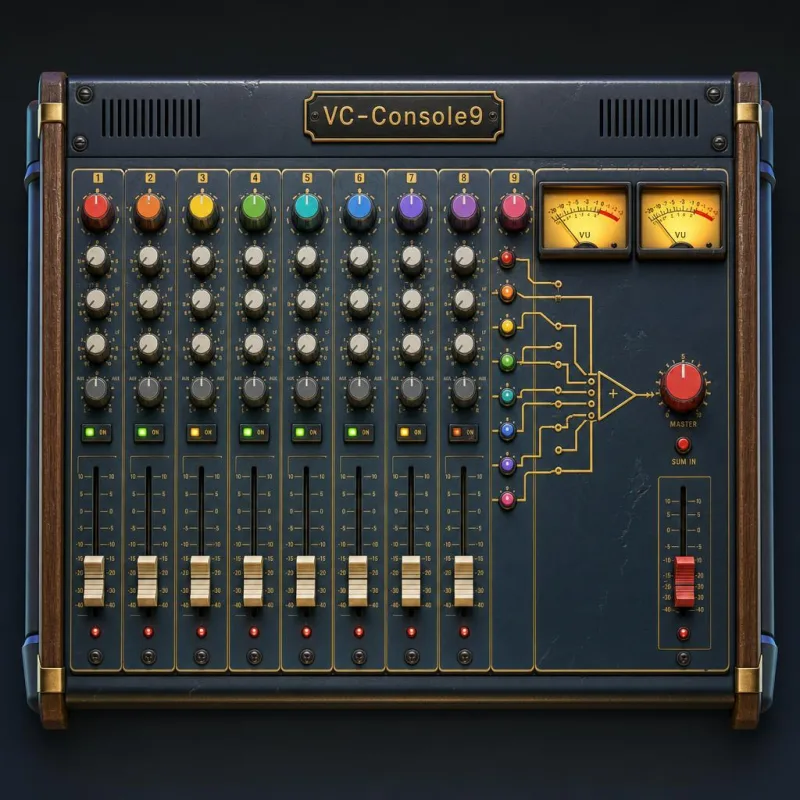
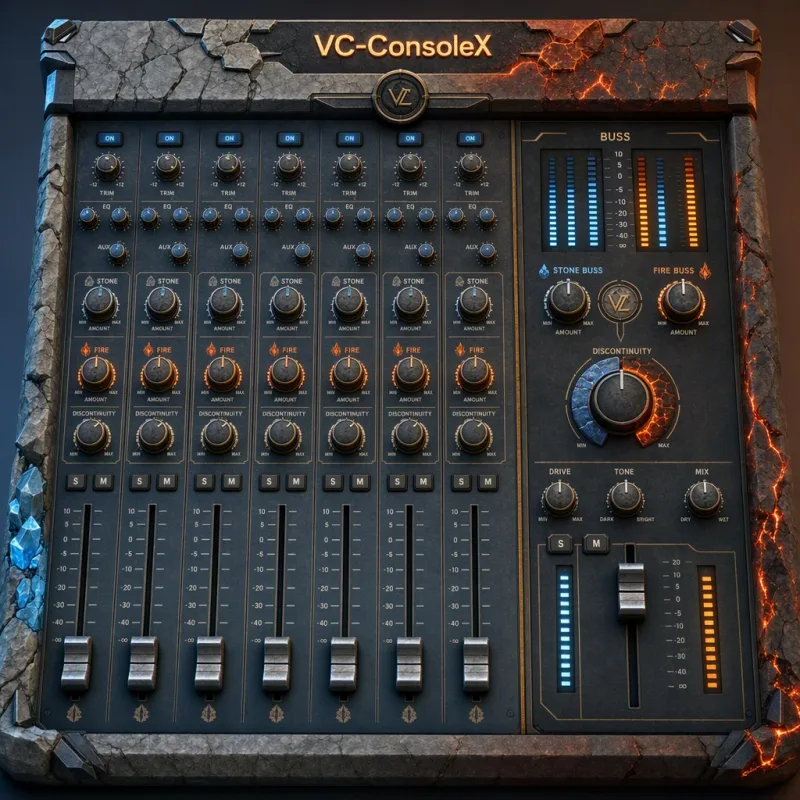
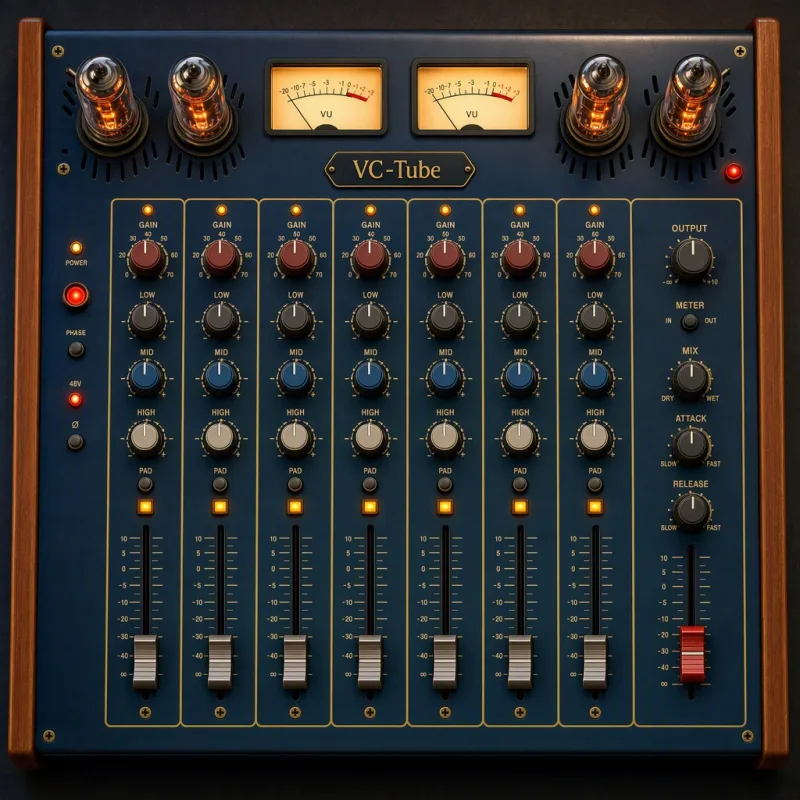
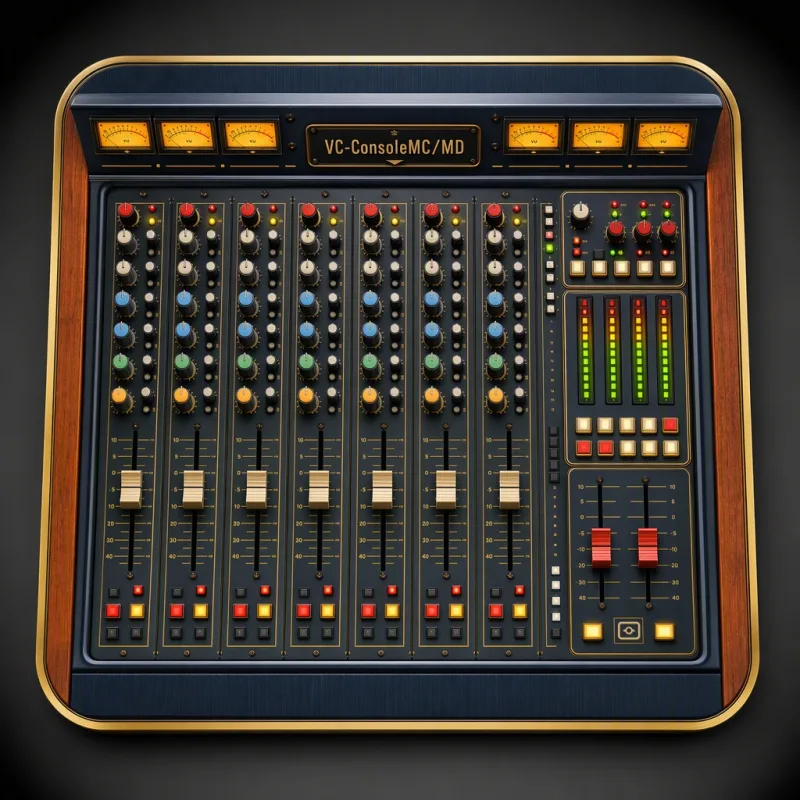
Several of Console’s summing, tape, channel and compressor models are ports of Chris Johnson’s Airwindows code, used under the MIT licence. What’s ours is the console around them — automatic encode and decode placement across your whole routing tree, plus our own compressor, gate and EQ.
Metering
Calibrated, and checked at five sample rates.
A meter is only worth having if you can trust the number on it. Here is exactly what was verified, and by what.
What it does not do
The part most pages leave out.
You will find all of this out in the first ten minutes anyway. Better here.
Want to know when it is ready?
Send us a line and we will tell you when there is something to install. No list you have to escape from afterwards.
Get in touchMeanwhile, Virtue FX Manager is shipping, and it is the other half of the same idea: your tools where you can see them.